Be yourself; Everyone else is already taken.
— Oscar Wilde.
This is the first post on my new blog. I’m just getting this new blog going, so stay tuned for more. Subscribe below to get notified when I post new updates.
Be yourself; Everyone else is already taken.
— Oscar Wilde.
This is the first post on my new blog. I’m just getting this new blog going, so stay tuned for more. Subscribe below to get notified when I post new updates.
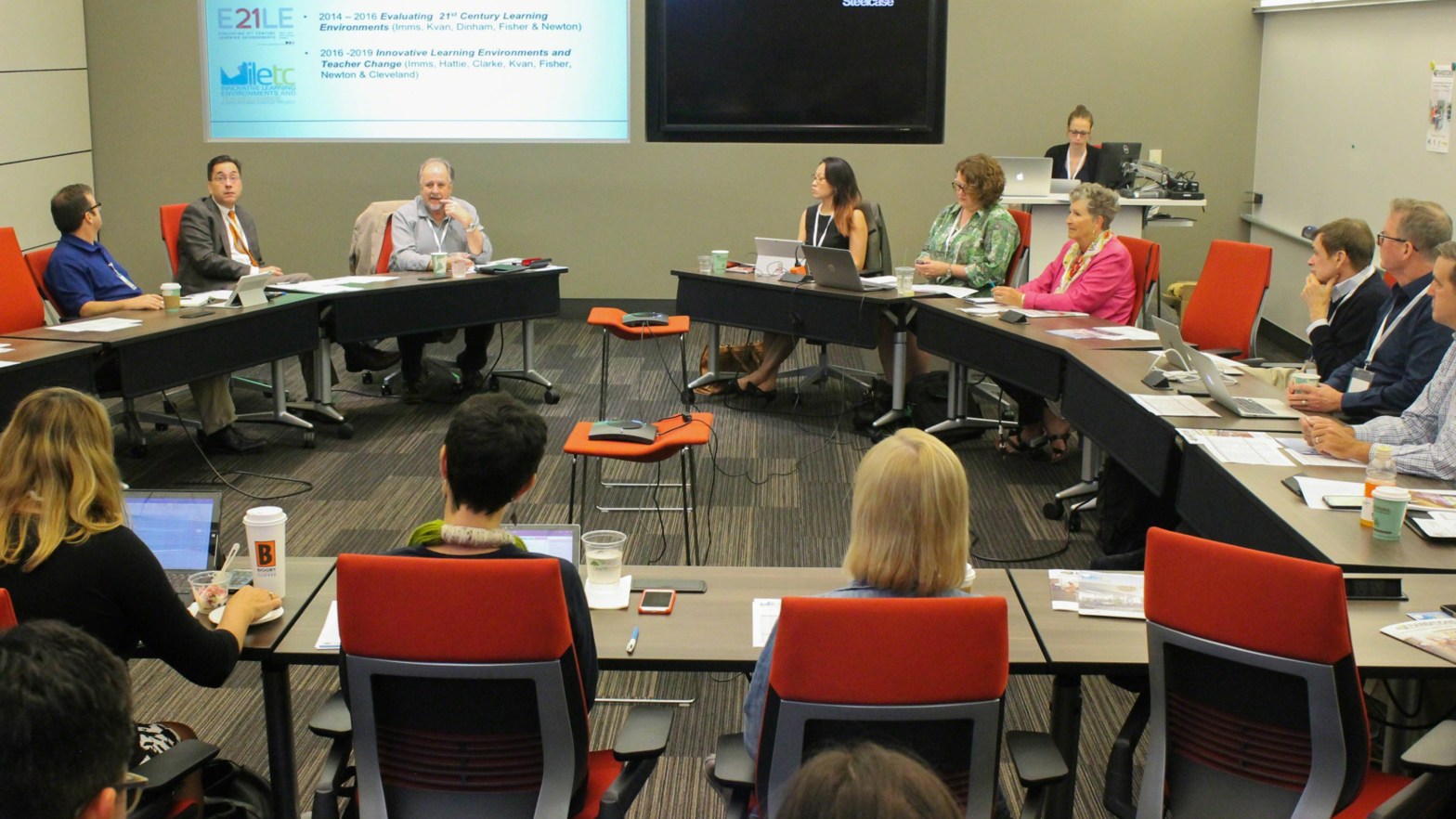
Chapter 6 was focused around the design of learning environments. There are many different places now where children can learn from throughout the world. Schooling has drastically changed over the years and has shifted around a good bit. Looking back to the 1800s, literature and writing were vastly different in the ways they are expressed today. There are greater opportunities now on different social media platforms where we have the ability to express what we learn to others on a broader community. As the book states, “today, students need to understand the current state of their knowledge and to build on it, improve it, and make decisions.” There are also these perspectives in learning environments that chapter 6 looked at. These are learner centered, knowledge centered, and assessment centered. Each one of these provides a different approach for children to learn from. Teachers should try and help these come in an alignment among these environments to help learning.
In chapter 7, it looked into effective teaching with the use of examples in the subjects history, mathematics, and science. Some teachers are able to teach in ways that involve a variety of disciplines. Within history, many kids don’t enjoy it because they don’t see the point in memorizing a bunch of dates. Good history teachers can flip this and make the dates not as important as them missing out on the whole material. For mathematics, many kids think it is all about computation. They do not fully grasp on how learning math will be beneficial down the road. Effective teaching can be used to show how multiplication has meaning and how in the future certain lessons will be beneficial. Science often gets over many kids heads according to the book. Many kids see science as too experimental and not understanding the key terms. Effective teaching would show kids that science is used day in and day out through life lessons. Effective teaching is so crucial in schools to help children have the best learning resources available.
This week we are focusing on chapter 5 which talked about quite a bit on how our brain processes and how memory works. Our class was told to describe what we thought about the saying “use it or lose it” in regards to memory in the brain. I believe this phrase is very relevant and very much so supported by this chapter. The chapter discussed in great detail about short term, long term, and working memory. On page 124, the book also stated “memory is neither a single entity nor a phenomenon that occurs in a single area of the brain”. Memory is a long process of storing in our brains where we have to revisit thoughts in order to keep them present and alert to remember them. Therefore, “use it or lose it” is a very broken down and simplified term that can be supported by this chapter in our book.
The two research reviewers posts I viewed were very interesting to me. The first one I looked at was from group 3 and it discussed how our brain processes sign language and gave a perspective from a deaf individual. This correlated with our book perfectly. I shared my thoughts stating that I was amazed how our brain broke down sign language. The links were awesome to share of the man signing the whole time because I feel like sign language should be displayed more so that other individuals are more exposed to this community and understand more of what is going on. The second post I commented to was group 5. The articles that were shared through this group were very much like mine I shared on how remembering things takes lots of storing in the brain. This is why you remember some things, but not others that are just faint in our brains. The links shared showed in depth how our brain makes many memories and how they are embedded in our mind.

This week in chapter 4 the book went into great detail on how children learn. From what I understand, babies start out with a blank slate and their brains are much like a sponge in that they absorb all information right up. At early ages children learn a lot by observing others and by adult support. The use of adults using a questioning tactic helps them develop a deeper and different understanding of topics and use new ways to learn more about subjects. Much of a child’s life is them steadily learning. Even before they reach school age they are learning big milestones such as walking and talking. It is important however for teachers to take into consideration when they get in school the different learning styles that different kids may have. Some kids may learn better by video lecture or hand written notes. It is important to help accommodate as much as possible to them to help provide them the best learning possibility.
In box 4.6 it is showing how kids solve problems. This is a difficult task for some to learn how to do and learn the patience that often goes into solving problems. In this box, an adult sat down to play with a child and dumped out a box full of toys. Then the adult told the child they could not play with them all and picked up two toys and asked the child to pick. This made the child have make a quick decision and be okay with not getting to do whatever they wanted early on. This choosing between toys and solving a problem is a crucial skill to learn early on and achieve well. Learning to abide by the rules and be okay to the situation is a huge deal that the child learned through this exercise.
The two resources that I enjoyed reading about were from group 10 about multiple intelligence and group 8 that showed websites about the importance of reading to children in and out of the womb. Like I have already stated earlier, knowing that people learn differently than you and intelligent in specific areas is important to take into consideration. This specific website that was shared showed a short clip on how diversity is great and helps make others special. Find your nack in something and be super intelligent in it embracing it every step of the way. The other websites discussed the importance of reading to your child and I strongly believe in this statement. I feel that even without statistics to prove that this is such a beneficial task to do as children can hear in the womb and are absorbing more information than we know. Reading is a wonderful thing and should be started very soon.

As the book discusses, I find it very true about really tuning in and finding out who you are as a learner. The metacognitive approach believes that the more you know about yourself the better you can learn as a student and throughout life. Finding out how you learn best could simply be done through surveys or trial and error like it has for me. I have learned that I learn best by flash cards and written notes more so than online work. With this being said, I have always been skeptical of online work because I struggle to teach myself. Throughout this course, I will stay on top of my stuff and work ahead so that if any problems arise I will be able to address them quickly.
After looking over the research reviewers posts, I have chosen the article links from my group, group 2 and group 4’s post. The student in my group posted a link to an article that explained how using flashcards helps you transfer material to learn better. I believe this is true and I am trying to use these more to help me learn better before tests. Memorization effects many students and causes many people to not be able to recall specific information in the future. This is an issue that needs to be addressed and corrected for the upcoming generation. Group 4’s research was also very interesting. After reading the article they shared, I feel like I can relate to it very much. Math has always been my worst subject and to hear that people are wanting to change how math is being taught would help tremendously in my opinion. I normally would go through and just memorize formulas for the test like the article stated that most people do. I took the GRE this past year and I found the math extremely difficult because of this reason and I had such a hard time recalling all the formulas back. I think with what this article is wanting to suggest would be very beneficial and useful for the generation to come.

This week the main idea of the tasks was discussing about what our digital footprint looks like. After googling myself, I found nothing that would not put off a good impression to a principal or future employer. I am thankful that everything was clear and I believe that this is important and that everyone should try and do this before they apply for a job. It is important that social media should be clean and professional as many employers will take this into consideration before hiring. After watching the video segments that were posted, I learned many helpful tips on cleaning up what might be on the internet about us. The biggest thing I took away would have to be how much professionalism on social media impacts the impression of others towards us. Be careful what is in the background of your pictures and even to the extent of who is in them. It is important that if teaching one day that you keep the kids names confidential on the internet to try and prohibit them from being exposed. Another big thing to remember is to make sure you have their parents approval if you are going to take pictures of them in class before posting on the internet. If these precautions are taken into consideration, the children should be kept safe.
The school platform sites that we were told to visit were somewhat difficult to work. I think that I am so use to canvas and blackboard that it made it hard for me to adapt. If I had to choose one that I liked out of the two, it would be Edmodo. I was not a fan of Kornukopia. Edmodo reminded me a lot like a Facebook group page with how you comment and voice your opinion.
There are so many new technologies that are out now, but the two that I choose to share to the class this week were the Id scanners for attendance and the use of Ipads in the school system and how these two are beneficial. I talked about the Id scanners for the task under school platforms and how these I think would keep schools safer in knowing where and who was at school. I choose to share the information about the Ipads for my group 2 assignment on the same padlet for the rest of the class to share their input and to see if anyone’s school used these very often. I put both of these on the same padlet because there was not a separate padlet to share the separate group assignment in case you have trouble locating. Overall, this week was a lot of tasks, but I learned some helpful to tips that will help me in the future with my digital footprint.
The book in these chapters discussed in depth how science has been developed overtime and used within learning today. The way people learn has always been fluctuating and changing with many generations in society today. Different analysis’s have been formed over the years that has helped make learning a little easier. These experiments were formed a lot of time using the stimulus and response methods such as the example in the book with the cats. Chapter one also stressed how important it is to learn with understanding and purpose. It also placed emphasis on using what you already know and help apply it to new topics you may not know anything about. Chapter two focused more around how if you focus on one subject and mastered expertise in it, would this benefit you more than being equally intelligent in all subjects. It was discovered in this chapter that people who play board games or are put in other strategic situations are benefited with learning strategy skills to use daily than those individuals who are not placed in these situations. These instances can greatly help in learning how to problem solving to figure out many tasks within life.
This is an example post, originally published as part of Blogging University. Enroll in one of our ten programs, and start your blog right.
You’re going to publish a post today. Don’t worry about how your blog looks. Don’t worry if you haven’t given it a name yet, or you’re feeling overwhelmed. Just click the “New Post” button, and tell us why you’re here.
Why do this?
The post can be short or long, a personal intro to your life or a bloggy mission statement, a manifesto for the future or a simple outline of your the types of things you hope to publish.
To help you get started, here are a few questions:
You’re not locked into any of this; one of the wonderful things about blogs is how they constantly evolve as we learn, grow, and interact with one another — but it’s good to know where and why you started, and articulating your goals may just give you a few other post ideas.
Can’t think how to get started? Just write the first thing that pops into your head. Anne Lamott, author of a book on writing we love, says that you need to give yourself permission to write a “crappy first draft”. Anne makes a great point — just start writing, and worry about editing it later.
When you’re ready to publish, give your post three to five tags that describe your blog’s focus — writing, photography, fiction, parenting, food, cars, movies, sports, whatever. These tags will help others who care about your topics find you in the Reader. Make sure one of the tags is “zerotohero,” so other new bloggers can find you, too.

 Edav427